
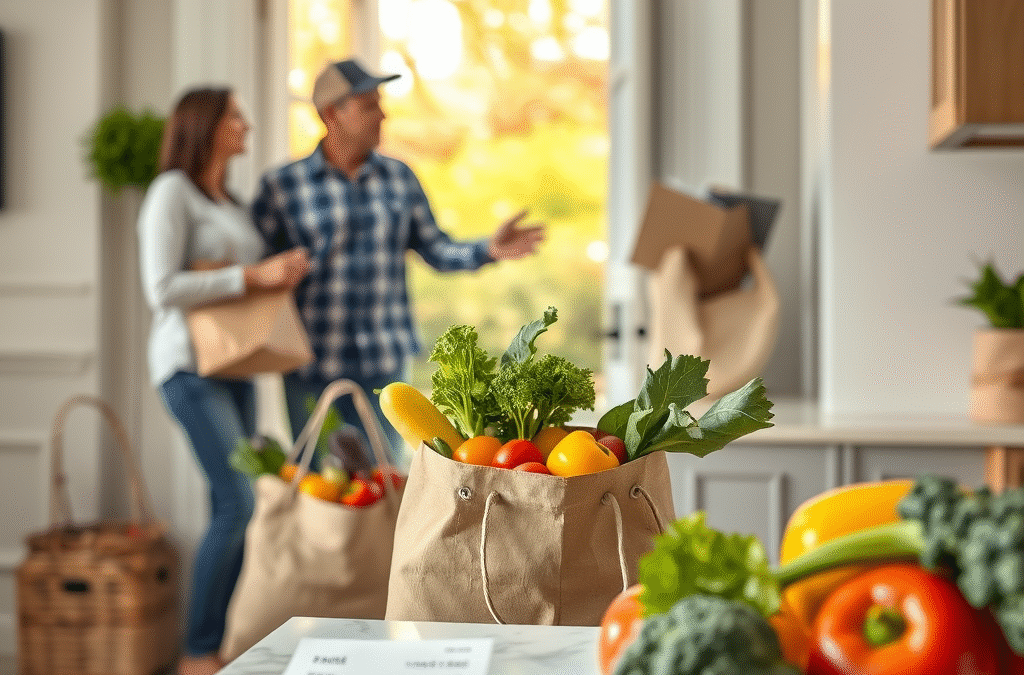
#Why Order‑Based Grocery Delivery Is Better Than Supermarkets in 2026 Order‑based grocery delivery lets you buy food online and have it brought straight to your door. In 2026 this model beats the traditional supermarket visit for most shoppers. It saves time, cuts waste, lowers cost, and gives you fresher food. Below you will see why the shift is happening and how you can join it today.
## What Is Order‑Based Grocery Delivery
Order‑based grocery delivery means you place a grocery order through an app or website. The retailer picks, packs, and ships the items to you. You never set foot inside a store. The model works for big chains, local farms, and new‑age tech‑driven startups. It relies on smart routing, real‑time inventory, and fast last‑mile delivery.
### How It Works – A Simple Step‑by‑Step
1. **Select a platform** that offers order‑based grocery delivery.
2. **Browse digital aisles** and add items to your cart.
3. **Choose a delivery slot** that fits your schedule.
4. **Pay securely** using your preferred method. 5. **Receive the order** at the agreed time, often in a reusable bag. Each step is designed to be clear and repeatable. You can reorder the same slot each week for consistency.
## Why It Beats the Traditional Supermarket Visit
### 1. Unmatched Convenience
Supermarkets require travel, parking, and walking through crowded aisles. With order‑based grocery delivery you skip all that. You shop from your couch, from work, or even while waiting in line at the pharmacy. The process takes minutes, not hours.
### 2. Time Savings That Add Up
A typical grocery trip can take 1–2 hours. Multiply that by four trips per month and you lose a full workday each year. Order‑based grocery delivery cuts that time by 80 % or more. The saved hours can be spent on family, hobbies, or rest. ### 3. Better Price Control
Online platforms show unit prices clearly. You can compare brands side by side without rushing. Many services offer price‑match guarantees or automatic discounts. You also avoid impulse buys that often happen in physical stores.
### 4. Fresher, Safer Food
Supermarkets restock shelves once a week. Items can sit for days before you pick them up. Order‑based grocery delivery ships products directly from the farmer or warehouse to your door within 24 hours. This reduces spoilage and exposure to germs. ## Freshness Guarantees You Can Trust
– **Cold‑chain monitoring** keeps perishables at the right temperature.
– **Real‑time tracking** shows you exactly when the delivery will arrive.
– **Date‑stamped items** let you see exactly how long they have been in transit.
If you receive a product past its prime, most services replace it at no extra cost. This confidence is hard to find in a standard supermarket aisle.
## Reducing Food Waste
Supermarkets often overstock to avoid empty shelves. Unsold food ends up in landfills. Order‑based grocery delivery uses demand‑driven inventory. You order only what you need, and the system adjusts production accordingly.
– **Dynamic forecasting** predicts how much of each item will sell.
– **Subscription models** let you receive a fixed box each week, reducing excess.
– **Partial deliveries** let you skip items you don’t need that week.
The result is a smaller environmental footprint and lower grocery bills for you.
## Personalization at Scale
Traditional supermarkets cannot tailor the shopping experience to each shopper. Online platforms use data to suggest items you are likely to love.
– **AI‑driven recommendations** surface recipes based on what you already own.
– **Diet‑specific filters** show gluten‑free, keto, or vegan options instantly.
– **Loyalty programs** reward repeat purchases with discounts on future orders.
These features make each shopping session feel uniquely yours.
## Technology That Makes 2026 Different
### AI and Machine Learning
AI helps predict what you will need next week. It analyzes past orders, calendar events, and even weather to suggest recipes. Machine‑learning models also optimize delivery routes to reduce fuel consumption.
### Automation in Warehouses
Robots pick items from shelves, reducing human error. Automated packing stations measure portions accurately, ensuring you get the right weight.
### Real‑Time Inventory Management
Unlike physical stores, online inventories update instantly. If an item sells out, the system removes it from your cart automatically. This prevents disappointment at checkout.
## Comparing Costs: Supermarket vs. Delivery
| Factor | Traditional Supermarket | Order‑Based Grocery Delivery |
|——–|————————|——————————|
| Travel expense | Fuel, parking, public transport | None |
| Impulse purchases | Common, often unplanned | Rare, thanks to structured cart |
| Price transparency | Limited, requires scanning | Clear unit price display |
| Time cost | 1–2 hours per trip | 5–10 minutes per order |
| Waste cost | Higher due to overstock | Lower due to demand‑driven model |
On average, shoppers who switch to order‑based grocery delivery report a 15 % reduction in monthly grocery bills. Savings come from fewer trips, reduced impulse buys, and lower waste.
## Sustainability Benefits
– **Reduced vehicle miles** thanks to optimized routing.
– **Reusable packaging** programs replace single‑use plastic bags.
– **Localized sourcing** cuts the carbon footprint of long‑haul transport.
Many services now partner with farms within 100 miles of major cities. This shortens the supply chain and supports local economies.
## How to Get Started with Order‑Based Grocery Delivery
1. **Choose a reputable platform** that serves your region.
2. **Create an account** and add a payment method.
3. **Set up a delivery schedule** that matches your routine.
4. **Explore the digital aisles** and add items to your first cart.
5. **Confirm your order** and track the delivery in real time.
### Tips for a Smooth Experience
– **Start with staples** like milk, eggs, and bread before adding specialty items.
– **Use the “favorites” feature** to save items you buy often.
– **Enable notifications** for order updates and delivery windows.
– **Leave feedback** if a product is out of stock or arrives damaged.
## Overcoming Common Concerns
### “What if the delivery is late?”
Most services guarantee a delivery window. If they miss it, they typically offer a credit or free redelivery.
### “Can I trust the quality of produce?”
Rigorous quality checks and real‑time temperature monitoring keep fruits and vegetables fresh. If you’re unsatisfied, a replacement is usually just a click away.
### “Is it more expensive than shopping in‑store?”
When you factor in travel costs and waste, order‑based grocery delivery often ends up cheaper. Many platforms also offer introductory discounts for new users.
## Future Outlook Beyond 2026
The trend will only accelerate. Expect more integration with smart home assistants, allowing you to say, “Add eggs to my grocery list.” Expect drone deliveries in suburban areas, cutting delivery times to under 30 minutes. Expect hyper‑personalized nutrition plans generated by AI, linking directly to your grocery cart.
## Practical Takeaways
– Order‑based grocery delivery saves time and money.
– It delivers fresher food with less waste.
– Technology in 2026 makes the experience intuitive and reliable.
– Anyone can start today by choosing a trustworthy platform and setting a delivery schedule.
Ready to make the switch? Your next grocery run can happen without ever leaving the house.
## FAQs
**Is order‑based grocery delivery available in rural areas?**
Yes, many services operate nationwide and ship to remote locations. Delivery windows may be longer, but the process is the same.
**How much does delivery cost?**
Fees vary by distance and order size. Some platforms waive the fee for orders over a certain amount.
**Can I schedule recurring deliveries?** Most platforms let you set weekly or monthly auto‑replenish for staples. This reduces the need to reorder each time. **What payment methods are accepted?**
Common options include credit cards, debit cards, digital wallets, and some grocery‑specific gift cards.
**Do I need a smartphone to use these services?**
A smartphone makes the experience smoother, but many platforms also work on desktop browsers.
**How fresh are the items when they arrive?**
Most perishable items arrive within 24 hours of being packed, often still chilled.
**What if I receive a damaged product?** Contact customer support through the app; they will arrange a replacement or refund.
**Are there family plans or bulk discounts?**
Some services offer family bundles or volume discounts for larger households.
**Can I return items I don’t need?**
Return policies differ by platform, but many allow unopened items to be returned within a set window.
**Is the service environmentally friendly?**
Yes, because it reduces food waste and optimizes delivery routes, lowering overall emissions.
**Do I need to be home for the delivery?**
No, you can leave instructions for where to place the order, such as a porch or neighbor’s porch.
**How does pricing compare to traditional supermarkets?**
When you factor in saved travel costs and reduced waste, order‑based grocery delivery often costs less overall.
**Can I customize my delivery box?**
Many platforms let you choose which items to include, allowing for dietary preferences.
—
Ready to experience the benefits of order‑based grocery delivery? Start today and see how easy shopping can be.